
Canada's Top Electric and Hybrid Vehicles: July 2026
Discover the best EVs and hybrids available in Canada this month, with insights into range, cold-weather performance, and incentive eligibility.

As of July 2026, the Canadian electric and hybrid vehicle market continues to expand, offering a wide array of choices across various body styles and budgets. The federal iZEV (Electric Vehicle Affordability Program) remains a significant driver, providing up to $5,000 for eligible BEVs and FCEVs, and up to $2,500 for eligible PHEVs with an electric range of 50 km or more. These incentives are applied at the dealership, with a general vehicle price cap of $50,000 for eligibility, though this limit does not apply to EVs manufactured in Canada. Several provinces, such as Quebec, also offer additional rebates, further enhancing affordability for Canadian consumers.
Best Electric Vehicles (EVs)
1. Tesla Model Y
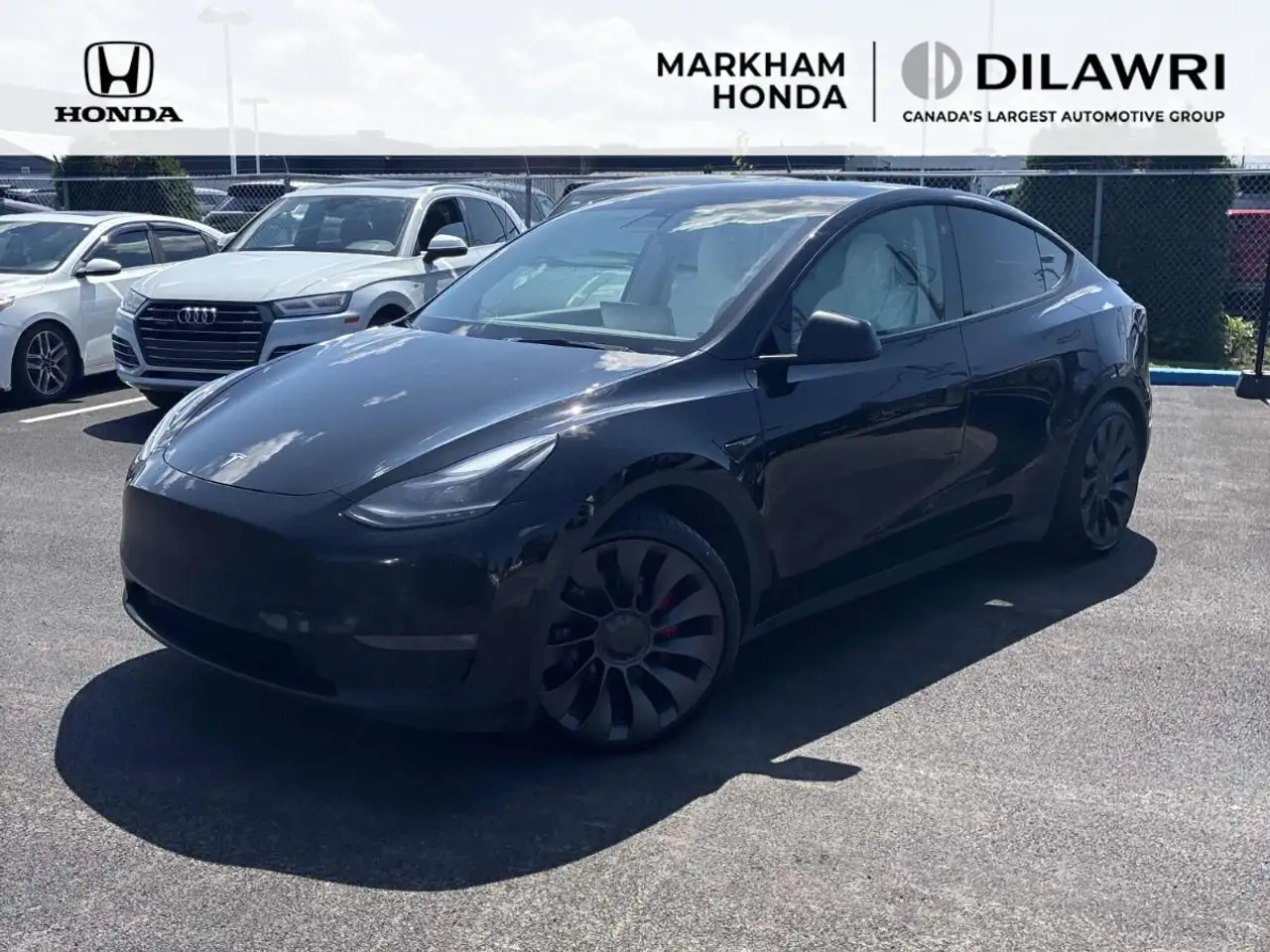 107 for sale on Fairlot from $26,990 — view them →
The RWD entry-level Tesla Model Y offers an excellent blend of range, efficiency, and practicality, making it a top choice for Canadian families seeking an EV eligible for federal incentives.
- Excellent estimated range of 463 km for the RWD model, making it one of the most efficient EVs in Canada.
- Access to Tesla's vast and reliable Supercharger network across Canada, reducing range anxiety on long winter drives.
- Practical compact SUV shape and space suitable for families and cargo.
- Entry-level RWD model qualifies for the $5,000 federal iZEV rebate.
- Base model's 150 kW fast charging is not top-tier compared to some rivals.
- Interior refinement may not feel overwhelmingly premium for some buyers.
- Ontario residents currently do not have access to a territorial EV rebate program.
2. Chevrolet Equinox EV
The Chevrolet Equinox EV promises true SUV utility with modern technology and available AWD, designed with Canadian weather in mind, and select trims are expected to qualify for federal incentives.
- Offers true SUV utility with ample space, appealing to families.
- Features modern styling and intuitive technology, including a large central touchscreen with Google built-in.
- Available dual-motor all-wheel drive for enhanced winter suitability and traction.
- Designed with Canadian weather in mind, with good cold-weather performance.
- Exact starting price to determine full incentive eligibility is not clearly specified in available data.
- While it has DC fast charging, specific speeds in kW are not consistently highlighted as ultra-fast like some competitors.
3. Toyota C-HR EV
Toyota's C-HR EV combines a bold, stylish design with impressive range and features built for Canadian winters, with its entry-level SE FWD model qualifying for federal incentives.
- Bold and stylish coupe-like design that stands out.
- Strong estimated range of 496 km for the SE FWD model.
- Built for Canadian weather and winters, with available AWD on higher trims.
- The SE FWD model's price is under $50,000, making it eligible for the $5,000 federal iZEV rebate.
- The XSE AWD model's starting price ($53,081) will likely exceed the $50,000 federal rebate threshold.
- As a relatively new EV, long-term reliability data for the electric powertrain may be less established compared to other Toyota hybrids.
4. Hyundai Kona Electric
The Hyundai Kona Electric is a highly affordable subcompact SUV EV, offering strong potential for combined federal and provincial incentives, making it a practical choice for urban Canadian drivers.
- Strong potential for combined federal and provincial incentives, making it a highly affordable EV option.
- Blends compact SUV practicality with a strong electric range of up to approximately 420 km.
- Equipped with Hyundai SmartSense™ driver-assist technologies for added safety and convenience.
- Typically a FWD-only vehicle, which might be a drawback for some Canadian drivers in winter conditions.
- Being a subcompact, cargo and passenger space will be less than larger SUV EVs.
Best Plug-in Hybrid Electric Vehicles (PHEVs)
5. Toyota RAV4 Prime
The Toyota RAV4 Prime stands out as a powerful plug-in hybrid SUV with a class-leading all-electric range of 80 km, standard AWD, and the versatility for both daily EV commuting and longer hybrid trips.
- Class-leading estimated all-electric range of 80 kilometres for a plug-in hybrid SUV.
- Combined 324 horsepower makes it the most powerful RAV4, offering strong acceleration.
- Standard all-wheel drive is a significant plus for Canadian winters and diverse driving conditions.
- Qualifies for the full $2,500 federal iZEV rebate for PHEVs due to its 80 km electric range.
- Higher starting price compared to the RAV4 Hybrid.
- Its starting price of $51,887.92 might exceed the $50,000 federal rebate threshold for non-Canadian-made vehicles, depending on the final transaction price.
6. Lexus RX 450h+ (PHEV)
The Lexus RX 450h+ offers a luxurious mid-size SUV experience with a meaningful 60 km all-electric range and standard all-wheel drive, blending premium comfort with plug-in hybrid efficiency.
- Blends premium polish with genuine efficiency in the luxury midsize SUV class.
- Standard all-wheel drive is a welcome feature for Canadian winters, enhancing safety and control.
- The RX 450h+ offers an estimated 60 kilometres of electric-only range for emission-free commuting.
- Significantly higher starting price due to its luxury positioning.
- The high price point of most trims, including the PHEV, might limit eligibility for some federal or provincial incentives.
Best Hybrid Vehicles (Non-PHEV)
7. Toyota RAV4 Hybrid
The Toyota RAV4 Hybrid remains a top choice for Canadian drivers, offering best-in-class fuel economy, standard all-wheel drive, and proven Toyota reliability, making it excellent for winter driving.
- Best fuel economy in its class, with 5.1 L/100km city and 5.9 L/100km highway for the base LE model.
- All-wheel drive is standard, a significant advantage for Canadian winters and varied terrain.
- Known for proven Toyota reliability and consistently high resale value.
- Assembled in Canada, contributing to the local economy.
- As a traditional hybrid, it does not qualify for federal iZEV rebates.
- While efficient, it may not offer the most thrilling performance compared to some rivals.
8. Toyota Grand Highlander Hybrid
The Toyota Grand Highlander Hybrid provides spacious three-row seating and strong performance with impressive fuel economy for a large family SUV, available with AWD for Canadian winters.
- One of the most spacious and powerful hybrid three-row SUVs on the market.
- Offers excellent performance with up to 362 hp (Hybrid MAX) for confident driving.
- Impressive fuel economy for a large family SUV, up to 6.6–7.0 L/100 km combined.
- Available with standard or optional AWD, making it suitable for Canadian winters.
- Higher initial cost than two-row hybrid SUVs.
- As a traditional hybrid, it does not qualify for federal iZEV rebates.
9. Kia Niro Hybrid
The Kia Niro Hybrid is an exceptionally fuel-efficient and affordable subcompact crossover, offering excellent fuel savings and a practical interior for Canadian drivers.
- One of the most efficient hybrid cars in the crossover segment, offering excellent fuel savings (up to 4.4–4.8 L/100 km combined).
- One of the more affordable hybrid options available in Canada.
- Offers a practical interior despite its compact size, suitable for urban living.
- All-wheel drive is not available, which can be a significant drawback for Canadian winter driving conditions.
- With 139 hp, performance might feel underpowered for some drivers.
- As a traditional hybrid, it does not qualify for federal iZEV rebates.
10. Toyota Prius (Hybrid)
The Toyota Prius remains a benchmark for fuel efficiency in Canada, offering around 4.4 L/100 km combined and available AWD for improved winter suitability, backed by Toyota's legendary reliability.
- Widely considered the most fuel-efficient hybrid car in Canada, with around 4.4 L/100 km combined.
- Known for Toyota's legendary reliability and low maintenance costs.
- Available all-wheel drive on certain trims offers an advantage in Canadian winters, enhancing traction.
- Excellent cold-weather performance for a hybrid.
- The standard hybrid model does not qualify for federal EV incentives (only the Prius Plug-in Hybrid does).
- The traditional sedan body style offers less cargo space and versatility than an SUV or crossover.
- Primarily focused on efficiency, not performance, which may not appeal to all drivers.